
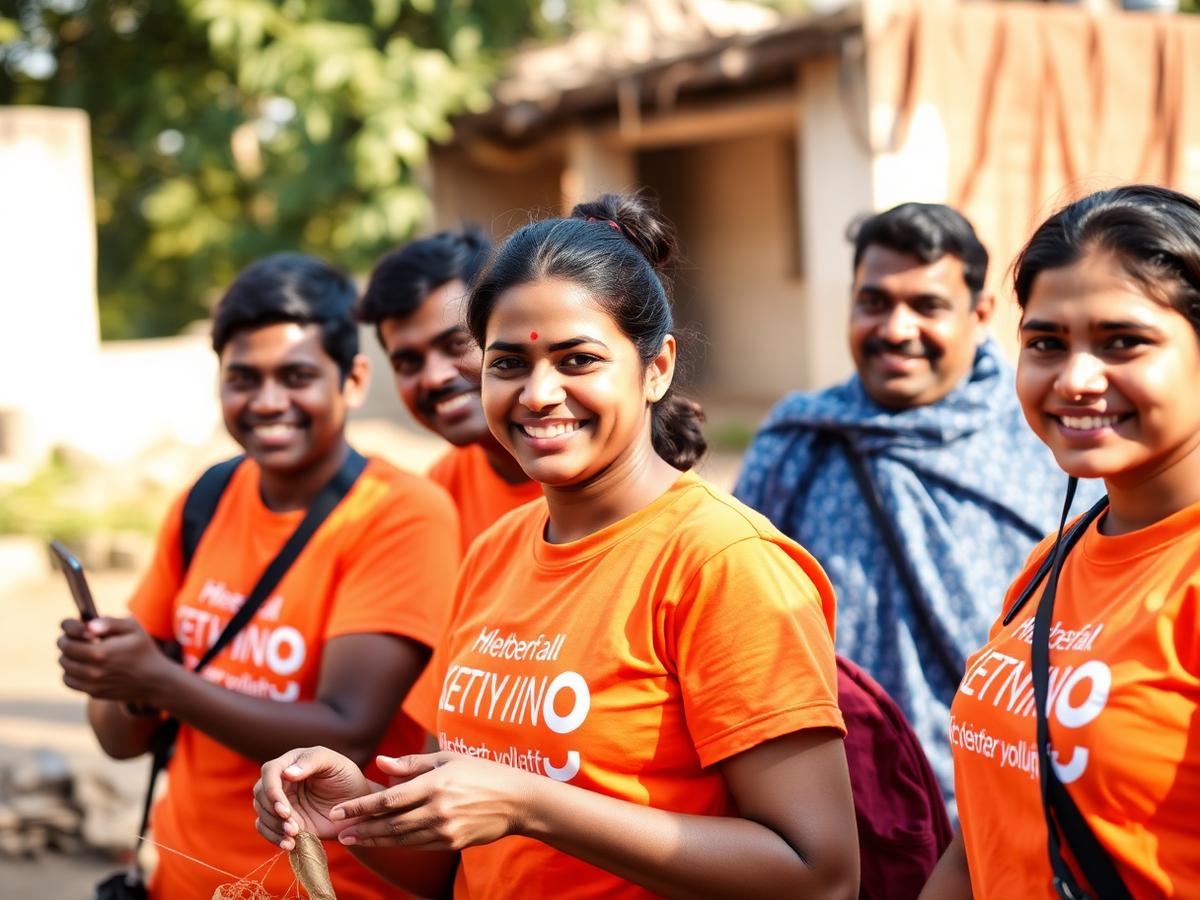
India's economic growth over recent decades has been remarkable — but beneath that progress sits a hunger crisis of staggering scale. According to the India Foodbanking Network: 189.2 million people, roughly 14% of the population, face undernourishment; 20% of children under 5 are underweight; 34.7% suffer stunted growth; and 51.4% of women of reproductive age (15–49) battle anemia.
The COVID-19 pandemic made an already hard situation worse, stripping away livelihoods for millions through shutdowns, layoffs and lockdowns. It was in this climate that Dr. Haresh Mirani reconnected with an old school friend, social worker Kashiram Jashnani. That reunion became a turning point: Jashnani introduced Dr. Mirani to the depth of the hunger crisis unfolding in Nashik, Maharashtra, and out of that conversation, the Mirani Foundation was born.
Through Jashnani's on-the-ground efforts, the Foundation's first act of aid reached over 25 families at Puj Sindhi Panchayat, Deolali Camp, Nashik — delivering essential food, beds, and a wheelchair. It was never meant to be a one-off. Since then, social activists and organizations across India have approached the Foundation seeking support for marginalized communities, and the response has kept growing.
As Winston Churchill once put it: "We make a living by what we get. We make a life by what we give." That's the principle the Mirani Foundation continues to operate by — expanding its reach one family, one community, at a time.